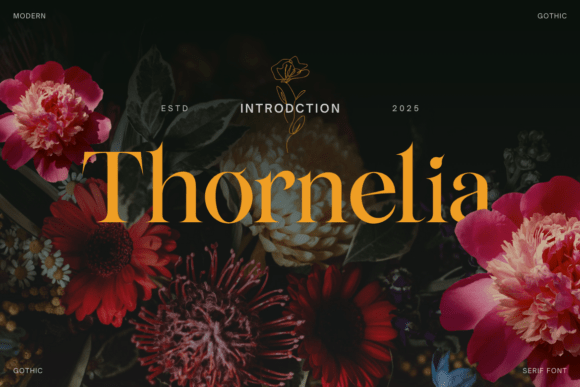
Thornelia Typeface: A Modern Gothic Serif for Bold Brand Identity
I opened a blank Figma file at 2 AM, staring at a gray canvas that needed to become a visual identity for a new artisanal skincare brand. The brief was simple but demanding: vintage elegance meets contemporary minimalism. I had tried three other serif typefaces, but they felt either too traditional or too trendy. Then I dragged in Thornelia. It wasn’t just another font; it was the anchor my entire project needed. Introducing Thornelia as your go-to modern gothic serif font that masterfully blends vintage elegance with a hint of contemporary style immediately changed the mood of the board. Its high-contrast design captures and holds attention, raising the stakes for every word it carries.
As a graphic designer working on real client projects, I don’t have time for fonts that look good in isolation but fail under pressure. This article isn’t a spec sheet. It’s a breakdown of how I tested Thornelia for a boutique coffee shop branding project, from the initial logo sketch to the final packaging mockups. If you are looking for a premium font that adds instant sophistication without sacrificing readability, this is how I used it.
Thornelia for Logo Design and Brand Marks
When starting the logo design process for a local specialty roaster, I placed Thornelia front and center. Display fonts like Thornelia are not meant for body text, but they shine when scaled up. I tested the main weight against a minimalist geometric sans serif font to create a lockup. The contrast between the thick and thin strokes in Thornelia created an immediate sense of luxury. It feels editorial, almost like a headline in a high-end fashion magazine, which is exactly the vibe the client wanted.
The key here is negative space. Because Thornelia has such distinct character shapes, it needs room to breathe. I avoided crowding the letterforms with heavy graphical elements. Instead, I let the typography stand alone, using only a subtle line element to frame the wordmark. The result was a clean, recognizable brand mark that looked expensive. For any designer building a brand identity from scratch, starting with a strong display font like Thornelia can define the entire aesthetic direction faster than experimenting with custom lettering.
Thornelia for Packaging Design and Product Labels
Once the logo was approved, the challenge moved to packaging. The client needed labels for small-batch jars and bags. I pulled up a print-ready PDF and dropped Thornelia onto a matte black label background. The white ink simulation made the high-contrast design pop off the screen. Fonts in the gothic serif category often carry a historical weight, but Thornelia’s modern curves keep it feeling fresh rather than dusty.
I used the lighter weights for ingredient lists and smaller details, pairing them with a clean sans serif font for technical information. This hierarchy ensured that while Thornelia grabbed the customer’s eye on the shelf, the necessary data remained readable. When designing product labels, consistency is king. By restricting ourselves to two typefaces—one expressive (Thornelia) and one functional—we maintained a cohesive look across all SKUs. The vintage elegance of Thornelia suggested heritage and quality, subtly telling the consumer that this product was crafted with care before they even read the description.
Thornelia for Social Media Graphics and Digital Headers
Digital presence required a different approach. Social media graphics need to stop the scroll, and Thornelia delivered. I created a series of Instagram posts featuring quotes about slow living and craftsmanship. Using Thornelia as the primary headline font, I experimented with tight kerning to create a solid block of text. The high-contrast design captures and holds attention, making the text legible even at small thumbnail sizes on mobile devices.
For website headers, I used Thornelia sparingly. It worked beautifully as an H1 tag on the homepage hero section, set against a soft beige background. However, I switched to a neutral sans serif font for navigation menus and paragraphs. This distinction is crucial for web design. While Thornelia is a creative font that adds personality, overusing it can lead to visual fatigue. By using it strategically for headlines and short-form text, we maintained professional readability while injecting brand personality into every page view.
Font Pairing Strategies with Thornelia
A common mistake designers make is trying to pair Thornelia with another decorative typeface. That rarely works. The best font pairing for Thornelia is simplicity. Since Thornelia already carries so much visual weight and stylistic detail, it needs a quiet partner. I consistently paired it with modern sans serif fonts like Montserrat or Lato for body copy. The geometric neutrality of the sans serif balances the organic, slightly dramatic curves of the gothic serif.
In some cases, for very specific accent texts like "Est. 2024" or small callout boxes, I experimented with a delicate script font. The combination of Thornelia’s structure and a flowing script added a human touch, reinforcing the handmade aspect of the brand. However, I always limited script usage to less than five percent of the total text volume. The goal is to let Thornelia remain the star of the show, acting as the backbone of the typographic system.
Technical Considerations and File Formats
Before delivering the final assets, I checked the included styles and alternates within the Thornelia file. Having access to multiple weights allowed me to build a flexible typographic scale. I also verified the multilingual support, ensuring that special characters for European languages rendered correctly. For print production, I exported the files as high-resolution PDFs with embedded fonts to prevent substitution errors. For digital use, I converted key headings to SVG paths to ensure they looked identical across all browsers and devices.
Commercial font licensing is another critical step. Thornelia came with a standard commercial license that covered our client’s needs, including web, print, and social media usage. Always verify these terms if you are using the font for merchandise or large-scale distribution. Understanding the legal boundaries protects both you and your client from potential copyright issues down the line.
Testing Thornelia Before Final Commitment
I never finalize a brand system without testing the font in situ. I printed out business cards, mockups of tote bags, and test posters to see how Thornelia behaved in physical form. On paper, the ink spread slightly, which actually enhanced the vintage feel of the gothic serif. On glossy stickers, the contrast was sharper. These physical tests revealed nuances that screens often hide. If you are considering Thornelia for your next project, do not skip this step. Print it, hold it, and see if it matches the tactile experience you want your brand to convey.
Ultimately, Thornelia proved to be more than just a typeface; it was a strategic tool. It helped us communicate values of quality, tradition, and modernity simultaneously. For designers tired of generic sans serifs, exploring unique display fonts like Thornelia can elevate your work from competent to compelling. Whether you are working on a boutique hotel rebrand, a luxury perfume label, or a creative studio portfolio, taking the time to integrate a distinctive serif font can pay dividends in brand recognition and audience engagement.